


Table of Contents
Purpose of the Parish Ministry Grant
The Diocese of the Rocky Mountains provides grants of up to $20K to:
Enable church ministry that will strengthen or extend outreach to the local community
Allow healthy but under-resourced parishes to overcome local outreach ministry obstacles to build on strengths and opportunities
Help parishes achieve significant steps forward in reaching those around them
-
An after-school tutoring program open to area school kids
Support initiatives for a crisis pregnancy center or women’s shelter
Essential care ministries reaching the underserved
Youth ministry events open and heavily advertised to unchurched youth
Classes or trainings designed for and open to the general public that advance shalom and discipleship (parenting classes, for instance)
Fellowship events aimed at welcoming non-believers (men’s adventure events, mom support groups, etc.)
-
Church staff hires
Training or teaching programs aimed wholly at Christians (excepting evangelism training)
Events only open or primarily advertised to church members
Non-outreach church supplies or curriculum purchases
Building renovation or improvement projects
Parish Grant Review Committee: Membership & Responsibilities
The Parish Grant Review Committee is made up of at least three members of the Diocesan Council who are appointed by the Council with the approval of the Bishop Ordinary. No member of the committee may evaluate a grant proposal related to his or her own parish.
Grant Review Process
Submission of grant proposal
Administrative Review
Committee Review
Committee Deliberation
Approval
Notification
Grant Evaluation Criteria
Mission Alignment
Does the ministry clearly advance the mission and values of the parish? Does it generally align with the mission and values of the diocese? Does it have a strong scriptural rationale?
Demonstrated Need
Is there clear evidence that the church ministry addresses a real community need and helps to bridge a parish resource gap?
Leadership Capacity & Local Support
Does the parish have capable leadership and sufficient volunteers or staff? Is there strong local investment and participation?
Ministry/Program Design
Is the plan thoughtful, feasible, and well-structured?
Impact on Parish Health
Does the proposal clearly demonstrate how this will help the parish grow in health overall (not just numerically)?
Measurable Outcomes
Does the proposal clearly define what success looks like?
Financial Stewardship
Is the budget responsible and aligned with the ministry plan? Is there clear evidence that church leadership teaches on tithing and stewardship? Is the church financially engaged but in need of additional support?
Sustainability
Is there a realistic plan for continuing to adequately fund and resource the church ministry after grant funding?
Reporting and Accountability
Mid-Year Report (due in early June) is to include:
Ministry progress update
Participation metrics
Challenges encountered
Financial update
Final Report (due in December) is to include:
Ministry outcomes
Lessons learned
Community impact
Final financial report & accounting
Annual Grant Cycle
Grant Announcement: April
Application Deadline: Mid July
Committee Review: August
Funding Decisions: September
Award Notifications: Early October
Grant Disbursement Begins: January
Mid-Year Reports: Early June
Final Reports: End of December


Guide to Writing a Parish Ministry Grant Proposal
Basic Information
Church Name
Project or Ministry Title
Primary Contact (include name, title, email, and phone number)
Project Duration (start & end dates)
Total Annual Project Budget
Grant Amount Requested
Project Overview
Please tell us about your ministry. Include:
A description of the need of the ministry or initiative
Who will be served
What the project will do
Expected outcomes, including for parish health
Vision & Ministry Need
In 1-2 pages, tell us:
What God has called this ministry to do. Share a scriptural and theological rationale for this; explain the connection to the mission and values of the parish.
Why this ministry is needed in your community (include demographics, statements from community or parish leaders, etc.)
How it shares the gospel and makes disciples.
Why your parish is uniquely positioned to do this work
Leadership and Parish Support
Describe the leadership of the ministry. Please include:
Who leads the ministry and why they are suited for this work.
How the parish supports and oversees the ministry.
How the ministry and parish intentionally support one another
Program Design, Outcomes, and Parish Health
Please provide:
The resources and activities of the ministry (inputs)
What these will directly produce (outputs)
The connection you see between the inputs and outputs
Expected short term changes (6-12 months) and anticipated long term changes for the community and parish (2-5 years)
How the parish overall will become healthier because of this ministry
How you will know the ministry has been successful
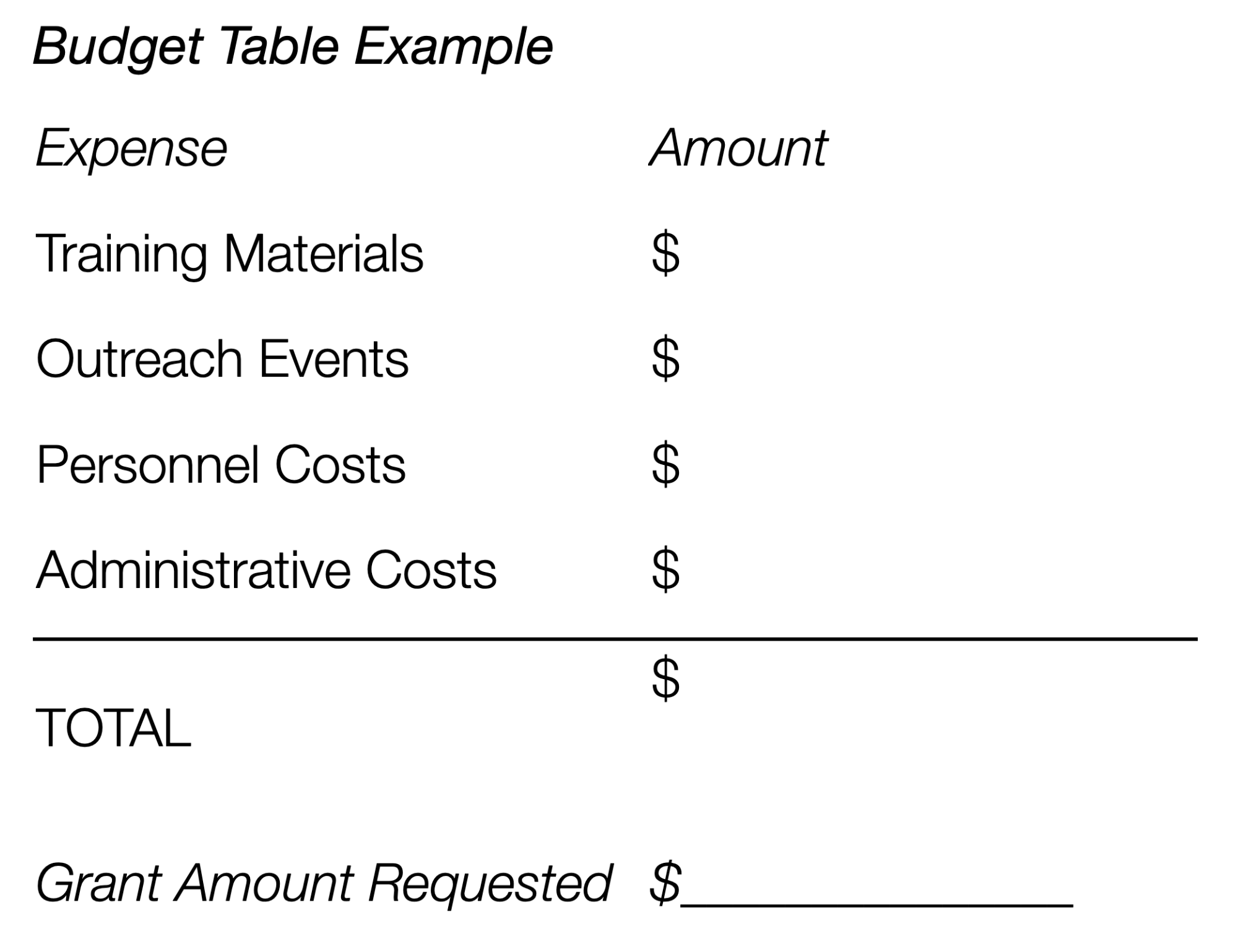
Budget for the Initiative/Ministry
Please provide:
Overall annual budget for the ministry & basic rationale
Current amount of financial support from the partnering parish
Other funding sources (if any)
Amount requested from the diocese
A brief written explanation of how the grant funds will be used
Ministry budget table
Sustainability Plan
Explain how the ministry will continue beyond grant funding. For example, explain how it will continue to be supported from sources such as:
Congregational stewardship & tithing
Volunteer leadership
Additional fundraising
Partnerships with other organizations
Outside grant funding
Supporting Documents
Include the following as supporting documents.
Parish budget (former year is sufficient with notes about any major anticipated changes)
Treasurer’s report on giving
Vestry/Parish Council members list
Vestry/Parish Council Letter of Support
OPTIONAL: Letters of support from other community members, etc.