
Ordination Journeys
Becoming a Deacon
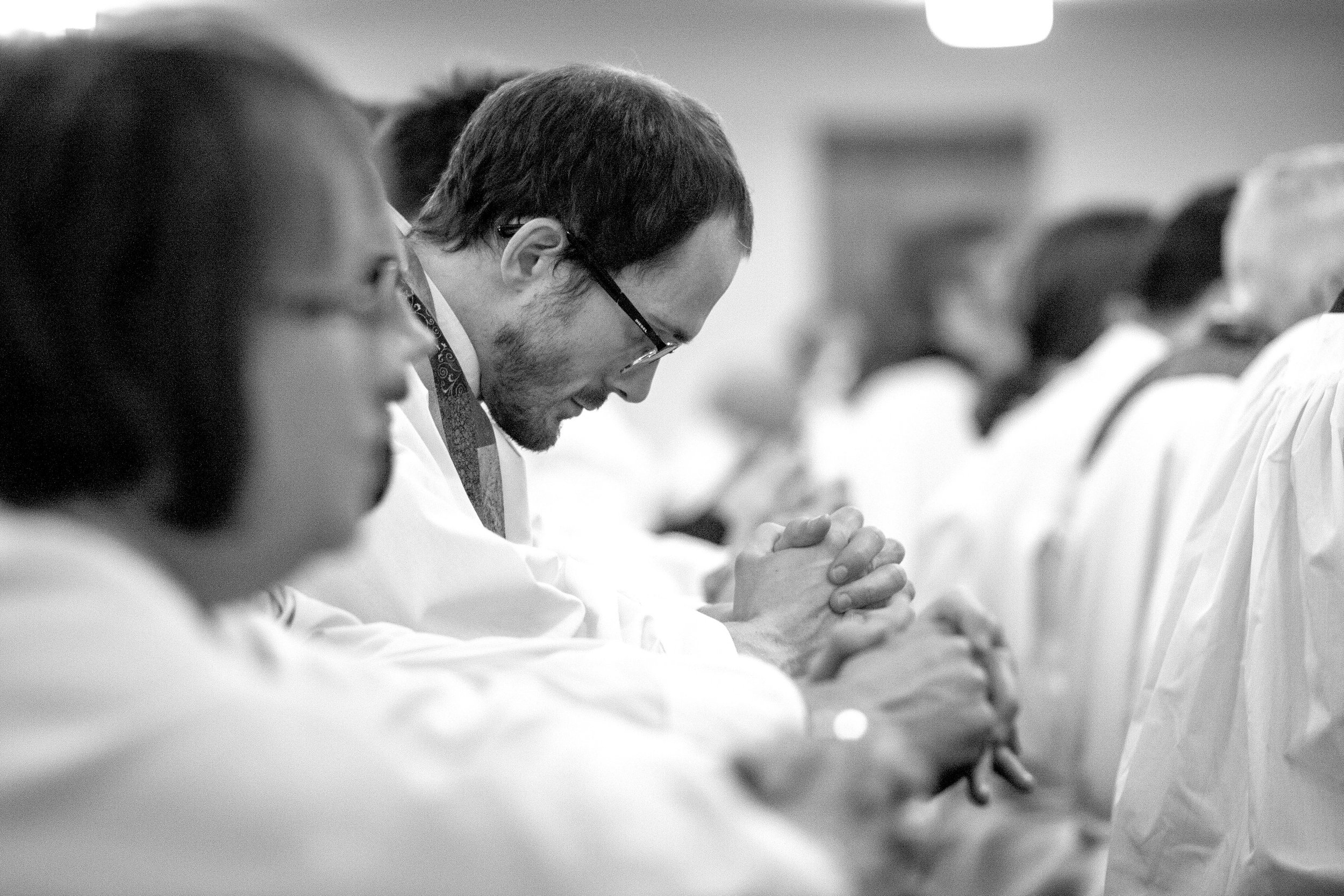
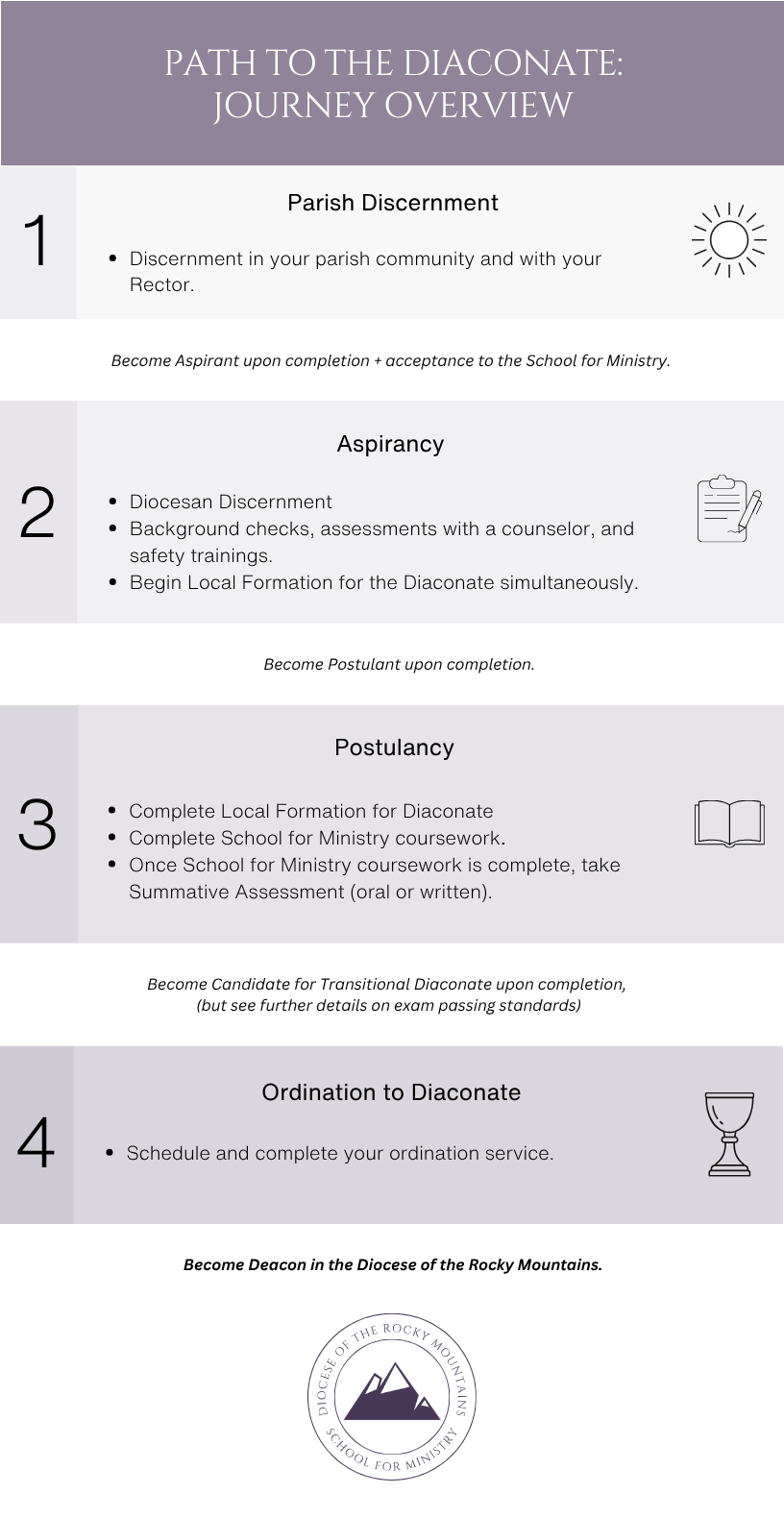
Those who believe they may be called to the office of deacon begin by praying and walking through a series of reflective meetings with their local parish and rector (a process titled “Parish Discernment”).
If and when these parish members and rector agree that nothing is holding the individual back from pursuing a diaconal calling, he or she becomes an aspirant and is accepted to our School For Ministry. From this point forward, the individual will engage in a series of trainings for body, mind, and soul:
They will be locally formed through training alongside their rector, learning the rhythms and needs of their local parish.
They will be theologically formed through their School for Ministry lectures, readings, and discussions (see the School for Ministry Theological Formation page for more details on this process).
Finally, on Ember Days (quarterly observations set aside for those pursuing ordination), ordinands will send letters to the Bishop, sharing their engagement with the ordination process and with life in general. Ember Letters provide ordinands with a means to let the Bishop know how they are doing spiritually, emotionally, and in family life, as well as to bring up any issues they might wish to discuss.
A process of spiritual formation flows from these three strands, drawing each ordinand to a full understanding of their calling to ministry, and what ministry pathways he or she might be called to follow.
Becoming a Presbyter
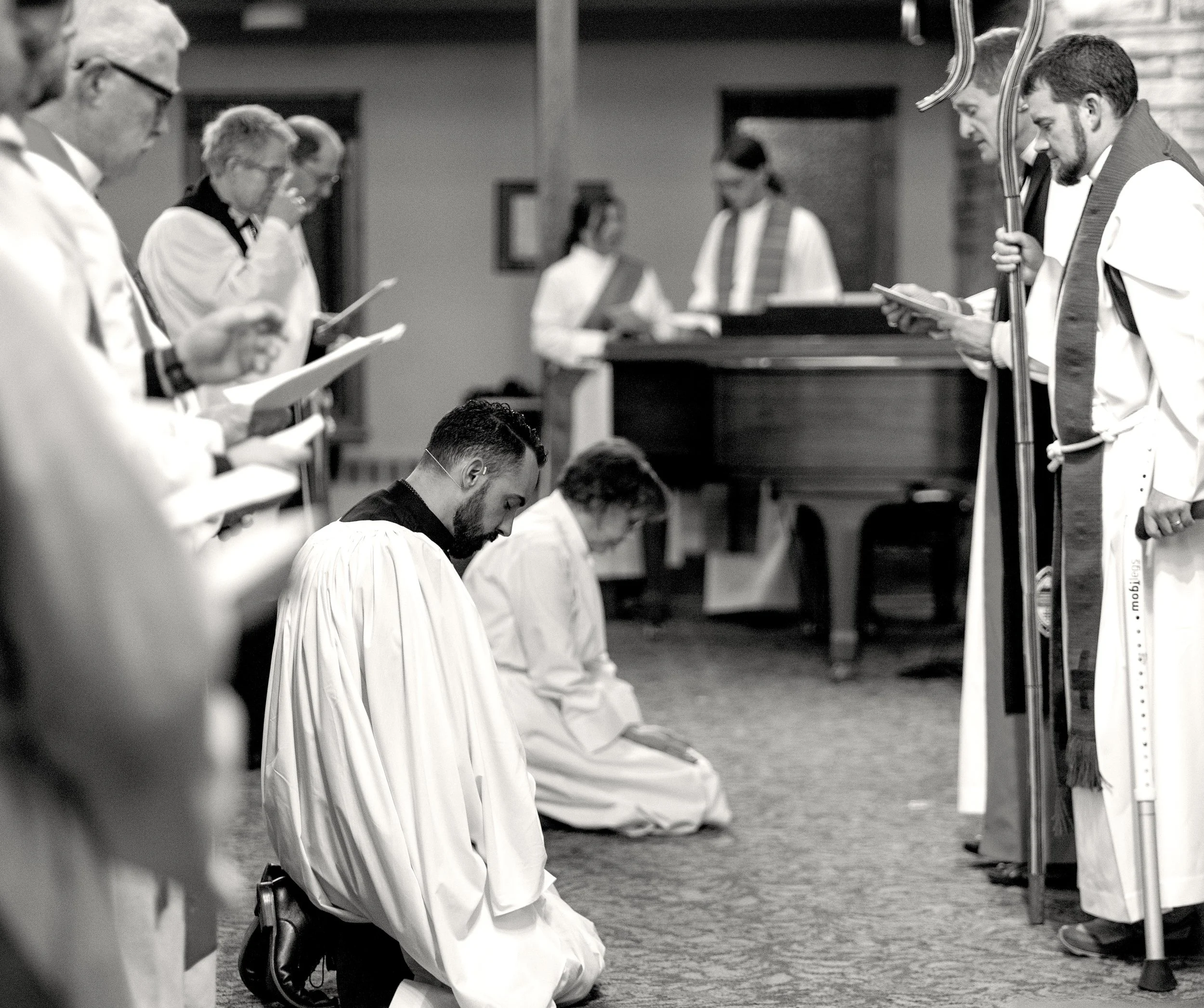
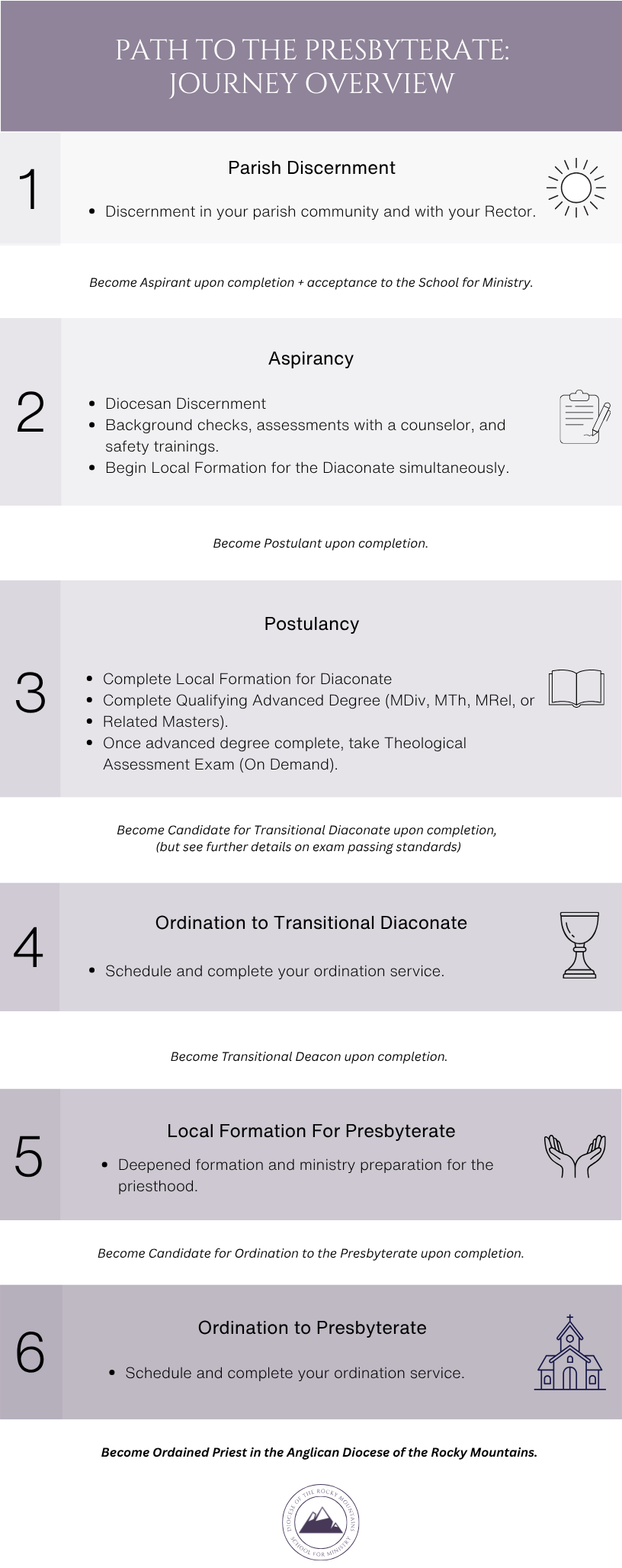
Those who believe they may be called to the office of presbyter follow many of the same steps detailed above, in the pursuit of the diaconate. Indeed, in order to become a presbyter, one must first pursue and practice the office of deacon.
If and when a deacon discerns a further calling to the presbyterate, he becomes a transitional diaconate in the School for Ministry. The School for Ministry requires an advanced degree in theology, divinity, or religion (MA, MDiv, PhD Theology, Church History, etc.), as well as taking a diocesan Theological Assessment Exam. (See the School for Ministry Theological Formation page for more details on this process).
Like diaconal ordinands, presbyteral ordinands also pursue a Local Formation plan in which they serve their local parish. Presbyteral ordinands do this through administering the sacraments, hands-on service, and preaching the Word of God.
Like diaconal ordinands, on Ember Days (quarterly observations set aside for those pursuing ordination), ordinands will send letters to the Bishop, sharing their engagement with the ordination process and with life in general. Ember Letters provide ordinands with a means to let the Bishop know how they are doing spiritually, emotionally, and in family life, as well as to bring up any issues they might wish to discuss.
This process helps each ordinand discern their calling to presbyteral ministry by further cementing their understanding of the Scriptures, theology, and ministry, and deepening their own spiritual life.
The length of time this journey takes depends entirely on the individual, whether they have already received their advanced degree, and the marks they receive on their Theological Assessment Exam. Feel free to reach out to our Credentialing Project Manager, Anna Holsteen, and/or to review the Presbyteral Formation Handbook (below) for further information.
COAT Ordination Process
When a clergyperson who has already been ordained pursues ministry in the Anglican church, their ordination journey differs slightly from both of the processes listed above. They will also pursue the strands of Local, Theological, and Spiritual formation listed above. That said, the fact that they have received prior ordination training means their path of study will look slightly different.
I do not know nearly as much about this process, and have not been able to find resources on it. Need to add a bit more here, and/or link to resources with more.